
Stop Following the Rules: 5 Ways to Make Your Cardmaking More Creative
- Rick Adkins

- 33 minutes ago
- 8 min read
Have you ever sat down to make a card, pulled out a stamp set or die set, and then immediately started looking for a sketch or sample card to copy? I know I have, and there is absolutely nothing wrong with using sketches, tutorials, and other cards for inspiration because they can be incredibly helpful, especially when you are learning a new technique or trying to figure out how to get started with a particular product.
At the same time, I think there comes a point in every cardmaker's journey when it becomes helpful to start asking a slightly different question: “What if I made the design decisions myself?”

That doesn't mean you need to become an expert in graphic design before you can make beautiful handmade cards, nor does it mean you have to stop using sketches and tutorials altogether. Instead, it means becoming more intentional about why you place something where you do, why you choose a particular color or pattern, and why you are using a certain supply in a particular way.
Stop Following the Rules: 5 Ways to Make Your Cardmaking More Creative
Looking back at the cards I have been making this week, I noticed that several of them were teaching me exactly that, even though they included completely different themes, products, techniques, and card formats. From designing a card without relying on a sketch to finding unexpected ways to use dies, creating stamped scenes, and combining pattern paper with die cutting and stamping, these projects all reminded me that good card design starts with making thoughtful choices.
So today, I want to share five design lessons from this week's projects that you can use the next time you sit down at your craft desk.

1. Start With a Purpose, Not a Sketch
Let's start with something I have been thinking about quite a bit lately, which is the way we use card sketches. Sketches are fantastic because they give you a place to begin when that blank piece of cardstock is staring back at you and you have no idea what to do with it, but I think they work best when we treat them as inspiration rather than instructions that have to be followed exactly.
Instead of choosing a sketch and then trying to make all of your supplies fit into that particular layout, try starting with a much more important question: What do I want the recipient to notice first?
That answer becomes your focal point, and once you know what you want to feature, the rest of the design decisions become much easier because you can begin arranging the other elements to support that focal point rather than allowing the sketch to make every decision for you.
Your focal point might be a beautifully colored stamped image, a large sentiment, an interesting die-cut element, or even a piece of pattern paper that you really want to showcase. Once you know what deserves the most attention, you can start thinking about where it should go, how much space it needs, and what other elements can be included without competing with it.
This is one of the biggest differences between simply assembling a card and actually designing one because you are no longer just asking yourself where each piece belongs; you are thinking about the role each piece plays in the finished design.
Try This on Your Next Card
Before you start cutting cardstock, choose one element that you want to be the star of your card and spend a few moments thinking about how you can support it with everything else you add.
Ask yourself where that focal point should go, how much space it needs, whether the surrounding elements are helping or competing with it, where the sentiment should be placed, and whether the card needs additional detail or would actually benefit from a little more breathing room.
You may discover that once you know what you want the card to accomplish, you don't need a sketch at all.

2. Give Your Supplies a Second Job
One of my favorite ways to stretch my creativity is to stop thinking about my supplies only in terms of their intended purpose and start thinking about all of the other possibilities hiding inside the same products.
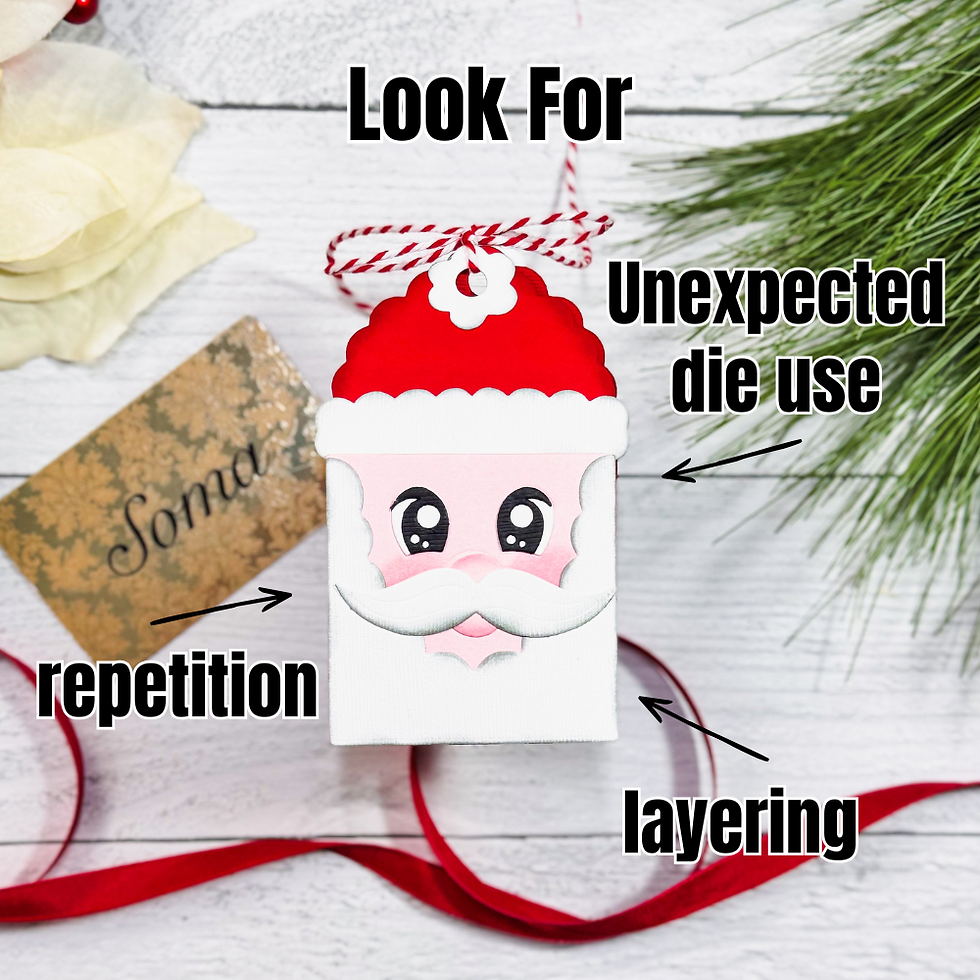
A die may be designed to cut a particular shape, but that doesn't mean you have to use the resulting shape exactly as it comes out of the die. Pattern paper may be designed to add a decorative element to a card, but it doesn't necessarily have to cover the entire background. A stamped image can certainly become the focal point of a card, but it can also become one part of a larger scene, and a simple die cut can take on an entirely different personality when you add foil or another decorative treatment.
Several of this week's projects reminded me how much creative potential we can find when we simply change the question we are asking about our supplies.
Instead of asking, “What is this product supposed to do?”, try asking, “What else could I do with it?”
That small change in thinking can make supplies that have been sitting in your craft room for months suddenly feel new again because you are no longer limited to the example shown on the packaging or the way you have always used the product.
Try This With Something From Your Stash
Pick one die, stamp set, piece of pattern paper, stencil, or embellishment from your stash and challenge yourself to think of at least three different ways you could use it.
If you choose a die, for example, you might use it in its traditional form, cut it from pattern paper, cut the shape apart and use only a portion of it, layer it several times, add foil to it, or even use part of the die cut as a completely different element on the card.
You don't have to make six cards just to prove that the ideas work because the real goal is to train yourself to see possibilities rather than automatically reaching for the most obvious use.
3. Build Around Your Focal Point
One thing I have learned over the years is that a beautifully colored image doesn't automatically result in a beautifully designed card because what happens around that image can be just as important as the coloring itself.
This becomes particularly noticeable when you are creating a stamped scene because you may have a main character or image in the foreground, a background image, ink blending, additional stamped elements, and several layers of color, but if every part of the scene has the same level of contrast and detail, your eye may not know where it is supposed to go.
This is where visual hierarchy becomes important because you want some elements to feel more important than others, which helps guide the viewer through the card instead of making everything compete for attention.
Your focal point might have stronger contrast, more detailed coloring, brighter or darker colors, additional dimension, or a larger scale, while the background can be softer, less detailed, or lower in contrast so that it supports the main image without competing with it.
This idea isn't limited to stamped scene cards, either, because the same principle can be applied when you are working with pattern paper, die cuts, sentiments, embellishments, and layered elements.
Here's a Simple Design Test
Once you have finished your card, place it somewhere that allows you to step back and view it from a distance rather than examining every detail up close.
Then ask yourself what you notice first, because if the first thing you see is the element you intended to make the focal point, your visual hierarchy is probably working well. If your eye immediately goes somewhere else, take a closer look at the contrast, color, size, and placement of the competing element and consider whether it needs to be softened, moved, or simplified.
Sometimes the solution is to add another element, but just as often, the better design decision is to take something away.

4. Let the Theme Influence the Design
Another thing I noticed while looking across this week's projects is how much the theme of a card can influence the way the entire design comes together.
A school card, Christmas project, birthday card, and true crime friendship card all have very different personalities, so it makes sense that they shouldn't necessarily be designed in exactly the same way.
The subject matter gives you an opportunity to make different choices with your colors, patterns, imagery, composition, and overall mood, which means the theme can become more than something you simply stamp onto the front of the card.
For example, a playful card might benefit from brighter colors, whimsical images, and energetic patterns, while a more mysterious or unexpected theme might call for darker colors, stronger contrast, or a more dramatic composition.
The important thing is to think beyond simply choosing an image and instead ask yourself, “What should this card feel like?”
Once you have an answer to that question, you can begin choosing the other design elements to support that feeling, which helps the finished card feel much more intentional.
This is one of the reasons I particularly enjoy creating cards around unusual themes because the theme itself can give you permission to step outside of the design choices you might normally make.

5. Break One Rule on Purpose
If there is one lesson from this week's projects that I would really like you to take back to your craft room, it is that you don't have to break every cardmaking rule in order to make a creative card; sometimes changing just one expected element is enough to make the project feel completely different.
This can be especially helpful if you are newer to cardmaking because you don't need to suddenly create an elaborate interactive card or completely reinvent the way you make cards.
Instead, look at a card you would normally make and intentionally change one thing.
You might move the focal point away from the center, use a die in an unexpected way, turn pattern paper into a smaller design element, change the orientation of the card, create a scene instead of simply placing a stamped image onto the card front, add foil to an otherwise simple die cut, or design your own layout rather than starting with a sketch.
The change doesn't have to be dramatic to be meaningful because the goal is to get yourself thinking about the decisions you are making instead of automatically following the same process every time.
And sometimes that one small change is exactly what leads you to your next big cardmaking idea.
What These Cards Taught Me
When I look back at the projects I worked on this week, I realize that they weren't really about ten completely different techniques, even though the finished cards certainly look different from one another.
They were really about making decisions.
The supplies we use are important, of course, because our stamps, dies, inks, markers, papers, and embellishments give us the tools we need to create, but those tools don't actually design the card for us.
We do.
That is one of the things I find most exciting about cardmaking because you can give the exact same stamp set to ten different cardmakers and end up with ten completely different cards.
Each person will make different choices about the colors, layout, focal point, pattern paper, techniques, dimension, and way the supplies are used, and those individual choices are what allow personal style to begin showing up in our work.
You don't have to invent a completely new cardmaking technique to develop your own style because sometimes your style is simply the collection of small decisions you consistently make.
A Little Challenge for Your Next Card
The next time you sit down to make a card, try resisting the urge to immediately reach for a sketch or copy the first sample you see.
Instead, begin by choosing your focal point and thinking about what you want the card to feel like, then choose the supplies that support that idea and intentionally change one thing from the way you would normally make a card.
Maybe you'll move an element, cut a die differently, try a new combination of pattern paper and cardstock, soften your background, add a little foil, or change the card format.
Whatever you choose, make that decision intentionally and pay attention to how it changes the rest of your design.
Because the goal isn't to make a card that looks exactly like someone else's.
The goal is to make a card that looks like yours.
And to me, that's when you stop simply following cardmaking instructions and start thinking like a card designer.
Thanks for dropping by today I hope that you found a little spark of creative inspiration with my project today.
Happy Crafting,
Rick Adkins


Comments